

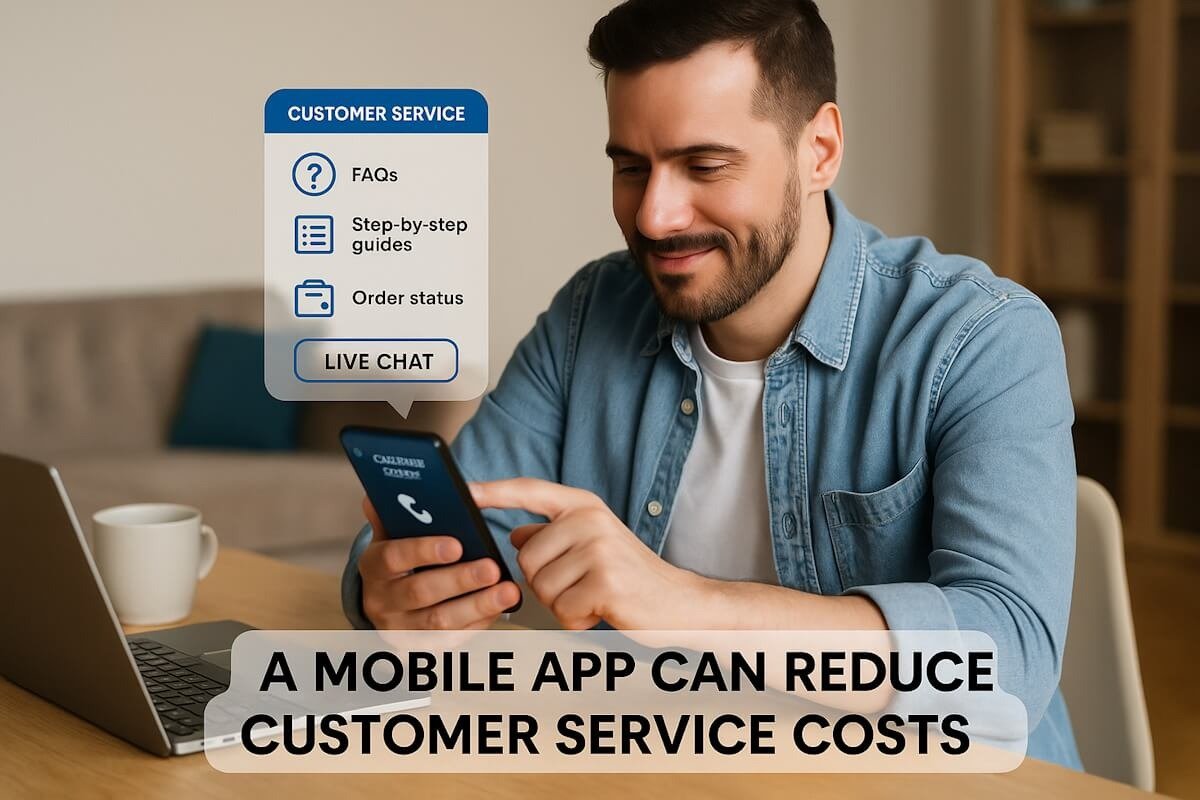
Customer service is where a lot of companies bleed money. Not because they’re careless — but because the traditional setup isn’t built for scale. Long hold times, high agent turnover, disconnected systems, and manual processes all stack up. And here’s the thing — most of it can be avoided. A simple mobile app can actually reduce customer service costs by 30% if done right.
Sounds like a bold claim? Let’s walk through it.
The Problem with Old-School Customer Service
If you’ve ever run a support team, you know the drill.
Support reps are overwhelmed. They’re juggling calls, live chats, emails, and help desk tickets all at once. Most customers are asking the same 10-15 questions, but there’s no real automation in place. New hires take weeks to train. Even after that, there’s constant turnover. And those customer surveys? They usually point out the same thing: response time is too slow.
Now, imagine trying to scale that during peak season. Costs shoot up. Quality dips. Customers get annoyed and bounce.
So Where Does an App Fit In?
Let’s say you launch a mobile app built specifically for customer service.
No, not just a static app with contact info and FAQs. We’re talking about a proper support tool — something your customers can tap into anytime they need help.
Here’s how it cuts costs:
1. Fewer Repetitive Tickets
Most support teams will tell you: the same issues pop up again and again. Shipping questions, password resets, status updates, how-to instructions. These don’t require human reps. They just need fast, clear answers.
With an app, you can bake those answers into self-service features.
- Interactive FAQs
- Step-by-step guides
- Order status tracking
- Automated troubleshooting
This alone can slash ticket volume. If 40% of your tickets are repetitive and your app can handle most of them, your support load drops dramatically. Fewer agents needed. Less stress all around.
2. Real-Time Chat and Smart Routing
Live chat is cheaper than phone support. But it’s still expensive if reps are stuck juggling five chats with no context.
A good mobile app fixes that.
- It collects user data automatically
- It routes chats based on issue type
- It sends priority issues to the right agent
That way, reps aren’t wasting time digging through back-and-forths. They get context upfront. They solve problems faster. You need fewer hands on deck to handle the same volume.
3. Notifications That Prevent Tickets
One of the smartest features of a mobile app? Push notifications.
Let’s say a package is delayed. Instead of 500 people calling in to ask where their order is, you send a single notification explaining the delay and expected delivery time.
That alone could save your team hours of unnecessary work.
Want to reduce the “Where’s my refund?” calls? Trigger alerts when a refund gets processed. Done. No ticket needed.
4. Built-In Feedback and Surveys
Forget follow-up emails that no one reads. In-app surveys get quick feedback in real time — when the experience is fresh.
That means you spot issues earlier and fix them faster. No guesswork. No long reports. Just honest input that helps you improve without paying consultants or running monthly audits.
5. Integrations with Your Support Tools
An app isn’t useful if it works in isolation.
The right one will hook into your backend systems: CRM, order management, help desk, whatever you’re using. That way, customers see live updates, and your team sees full context.
If you’re working with a Mobile App Development Company in USA, they can tailor the app to connect with your existing tools instead of forcing you to rebuild your tech stack.
This kind of sync makes things faster for both your team and your users. Faster = cheaper.
6. Better Use of AI (Quietly)
Don’t worry — we’re not about to throw buzzwords at you. But it’s worth mentioning that AI is starting to play a quiet but useful role.
Let’s say you want to offer 24/7 chat. That’s not cheap if humans are doing it. But if your app includes a chatbot trained on actual support data, it can handle a good chunk of queries without sounding like a robot.
Some companies are even building a mobile app using chatgpt to power this. It gives customers instant help while saving you the cost of hiring a full-time night shift. And the tech has gotten better — when set up properly, it can actually understand real questions and provide clear answers.
The point is, you can use automation without losing the human touch. And that leads to real savings.
7. Scales Without Scaling Costs
Every time your business grows, so does your support demand. If your only option is to hire more reps, things get expensive fast.
But an app? Once it’s built, it serves everyone — 100 customers or 100,000. The marginal cost of supporting an extra customer drops.
That’s how companies scale without blowing up their budget.
8. More Satisfied Customers Spend More
Let’s talk about the flip side of cost: revenue.
Customers who get their questions answered fast stick around. They’re more likely to buy again. They’re more likely to leave good reviews. They’re more likely to refer others.
And yeah, they file fewer support tickets too.
So while the app saves you money, it also quietly helps you make more. And that’s a win.
Is It Really That Simple?
Simple? Yes. But not effortless.
You still need to do it right. The app has to be well-designed. It should reflect how your customers actually think and what they need help with. And it should be fast. If it’s clunky or slow, people won’t use it.
This is where working with the right team matters. A Mobile App Development Company in USA that understands both design and backend systems can make sure your app actually solves problems, not adds new ones.
What About Hiring?
Some companies aren’t looking to cut customer service roles — they’re looking to make better hiring decisions.
In those cases, tools like an AI interview platform can help vet support candidates faster. Instead of going through hundreds of resumes, you can screen people with role-specific questions and scenarios. It saves time, filters out poor fits, and helps you build a stronger team.
Again, the goal isn’t just about tech. It’s about making smarter decisions that save money long-term.
So, Should You Build a Support App?
That depends. If your support team is already lean, and your customers are mostly happy, maybe not.
But if you’re:
- Dealing with rising support costs
- Seeing the same tickets over and over
- Struggling to train or retain agents
- Losing customers due to slow service
…then it might be time.
The upfront cost of building an app might seem high, but when you compare it to the ongoing cost of hiring, training, and scaling a large team — it’s not even close.
And that 30% reduction? It’s not a guess. Companies that track before and after numbers often see even better results.
Want to Make the Shift?
Start simple. Look at your current support flow. Ask your team what slows them down. Check your help desk stats — what are your most common questions?
Then, map out how an app could handle those top issues. Think small. Start with the biggest pain point. Build a simple version. Test it. Improve it. Grow from there.
If you’re not sure how to get started, connect with a Mobile App Development Company in USA. Find one that’s done this before — not someone just looking to push a template.
Done right, this isn’t just about saving money. It’s about building something your customers actually want to use.
And that makes everyone’s job easier.